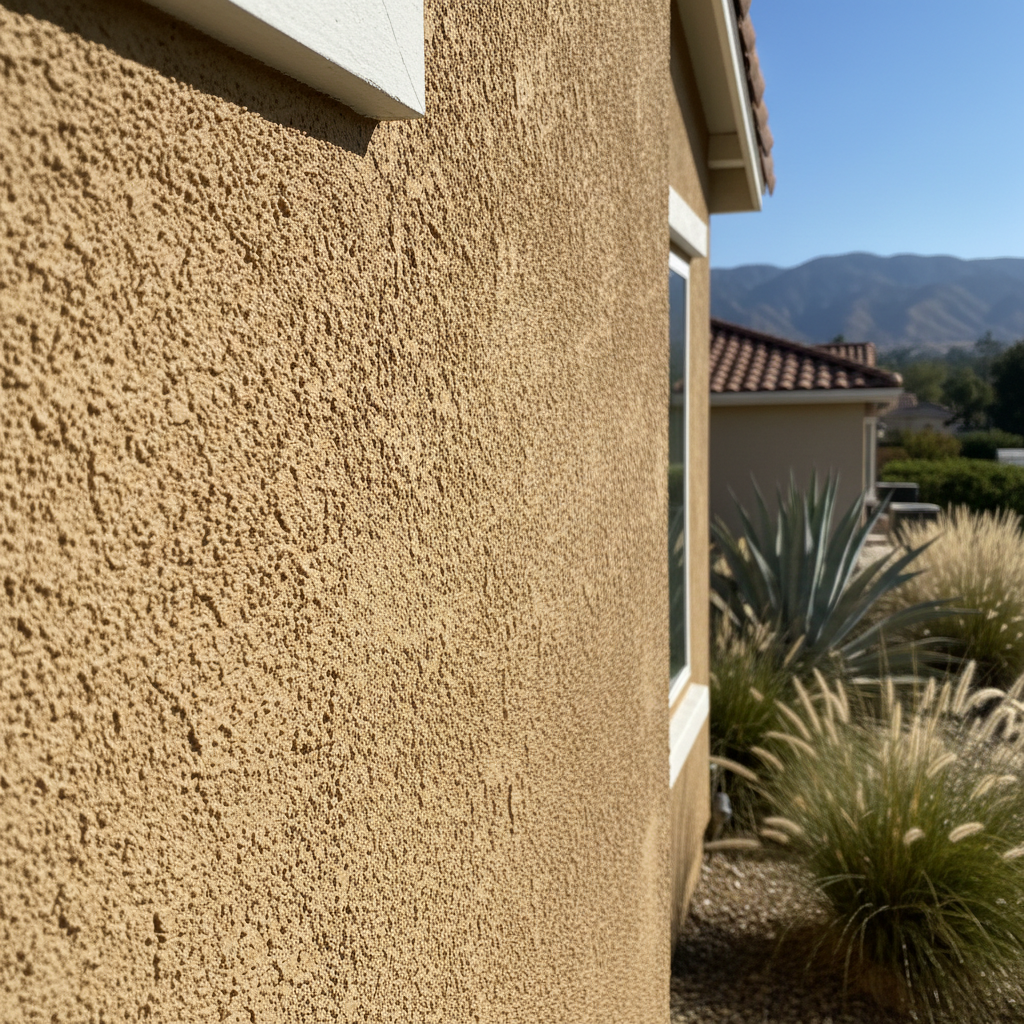
Stucco is tough, but it is not bulletproof. If you live around Dalton Village or up closer to the foothills near Azusa Pacific, your home exterior takes a beating from heavy sun, Santa Ana winds, and the occasional heavy winter downpour. Paradise Stucco sees homeowners wait until water is pouring through a wall before they look closely at their stucco, and by then, minor maintenance has turned into a major expense. You do not need a cart full of expensive gear to check your own walls. You just need a sunny afternoon, a flashlight, and a little know-how.
Before You Start Walking the Walls
Grab a notebook and keep it simple. You are looking for changes since the last time you painted or washed the house. Before you walk outside, think about what is happening inside. Are your interior baseboards warping? Do you smell a musty odor near an exterior wall? Stucco holds onto moisture when it fails, and the first warning sign often shows up inside the house long before the outside crumbles. Once you head outdoors, make sure you can actually see the walls. Trim back any overgrown bougainvillea or ivy. Azusa yards love to grow thick, but vines trap moisture right against your stucco and eat away at the finish.
What You Can Check Yourself
Start from the ground and walk the perimeter of your house. Look for hairline cracks. A crack the thickness of a human hair is normal settling, especially in our dry local climate, but anything wider than a credit card needs attention. Take a close look around your windows and doors. The caulking shrinks over time, and that is enemy number one for water intrusion. Tap gently on the stucco with your knuckles every few feet. If it sounds solid, you are fine. If it sounds hollow or papery, the bond behind the finish coat has failed and the stucco is delaminating from the lath. Check the weep screed at the very bottom of the wall near your foundation. If it is buried under landscaping dirt or concrete, water has nowhere to escape.
When It is Time to Hand It Over
Surface cleaning and minor patching are totally fine for a Saturday DIY project. But the moment you spot rust stains bleeding through the stucco, stop right there. That means the internal metal lath is rusting, which usually points to a deeper moisture leak from a bad flashing job or a roof issue. If you find large areas of crumbling stucco or soft spots that give way under gentle pressure, you are looking at framing damage. Paradise Stucco gets calls all the time from people who tried to slap patch compound over hidden rot, only to watch the whole patch fall off six months later. If the problem goes deeper than the surface coat, bring in someone who knows how to cut out the bad section and tie the new mesh and scratch coats back into the original wall.
For homes and businesses in Azusa, Paradise Stucco provides Stucco Repair services that save you thousands of dollars down the road. Make it a habit to walk your property twice a year, especially after we get our seasonal temperature swings. A little proactive looking today keeps your home solid for 15 to 20 years or more.